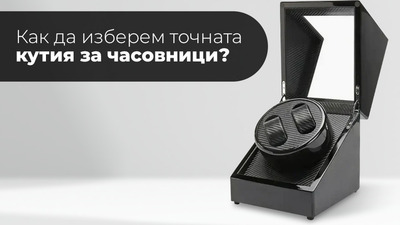




Watches are not only practical accessories but also valuables that deserve proper care. Whether you own a Swiss luxury piece or an affordable everyday model, how you store your watch makes a big difference to its looks and accuracy. Poor storage can lead to scratches, corrosion, loss of water resistance and even movement failure. Here is what to pay attention to.
Avoid extreme temperatures and humidity
High temperatures can damage the movement and lubricants, while sudden cold can cause condensation. A stable room temperature of roughly 15–25 °C is ideal. Keep your watch away from direct sunlight and heat sources such as radiators.
Avoid damp places too: moisture can get into the case and cause rust. Relative humidity of around 40–60% is ideal. In a humid climate, a small silica gel pack in the watch box helps.
Keep it in a watch box or pouch
To protect your watch from dust, knocks and scratches, keep it in a box or pouch when you are not wearing it. Good watch boxes are lined with soft material and often have separate compartments for spare straps or jewelry. See our watch and jewelry boxes and our guide on how to choose a watch box.
Avoid plastic bags or cardboard boxes: they offer little protection and let in dust and moisture.
Stay away from magnetic fields and strong vibrations
Magnetic fields can disturb the balance spring of a mechanical watch and make it run fast or slow. Do not store your watch next to speakers, phones, laptops or tablets with magnetic covers. Strong vibrations, for example on top of a washing machine, can damage delicate movement parts.
Clean it regularly

Dust and dirt build up over time. Wipe the case and crystal with a soft cloth and avoid harsh cleaners and solvents. Clean the strap separately from time to time: leather absorbs sweat and oils, and metal bracelets collect dirt between the links. Our guide on how to clean and polish your watch explains how.
Have it serviced by a professional
However carefully you look after a watch, a mechanical movement needs professional servicing roughly every three to five years, depending on the model and use. The watchmaker will dismantle, clean and re-lubricate the movement, check the water resistance and replace the seals if needed. If you notice your watch losing accuracy or becoming hard to wind, take it in sooner.
Consider insuring valuable watches
If you own a particularly valuable watch, insurance can protect you against theft, loss or accidental damage. Keep the receipt, box and papers: insurers usually ask for proof of value, brand and model.
Frequently asked questions
Should I store an automatic watch on a watch winder?
A watch winder keeps an automatic watch running so you don't have to reset it. It is convenient, especially for watches with complications, but not essential. Choose a quality winder with adjustable settings; see our boxes for automatic watches.
Can I leave a quartz watch in a drawer for months?
Yes, but if you won't wear it for a long time, consider having the battery removed or replaced, as an old battery can leak and damage the movement.
Is it safe to keep several watches together?
Only if each one has its own compartment. Watches touching each other can scratch cases, crystals and bracelets.
Conclusion
A little care goes a long way. Store your watch in a dry, stable place, in a proper box, away from magnets, and have it serviced on time. That way you will enjoy its beauty and precision for many years, and maybe pass it on to the next generation.